How a Scalable AI Integrated Zapier Architecture Automated Revenue-Generation Campaigns for a High-End Services Business
A high-end services business serving high-net-worth residential and commercial customers wanted to increase repeat revenue from its existing customer base—without adding operational overhead.
Outcome: Step 7 designed and delivered a scalable automation architecture that continuously synchronized customer and job data from Housecall Pro, maintained an internal data store, and automatically generated campaign-ready customer lists for HighLevel CRM—eliminating hours of manual work while enabling recurring, revenue-driving outreach.
Client Background
The client is a premium services company based on the East Coast, serving high-net-worth residential and commercial customers. Founded in the early 1990s, the business has built a strong reputation for quality service and long-term customer relationships.
Operationally, the company uses Housecall Pro to manage customer jobs and service history. Its marketing agency uses HighLevel CRM to manage outbound email and text campaigns.
Step 7 was engaged to design and implement automation that would allow the business to activate existing customer data for marketing and revenue growth—without requiring manual reporting or ongoing staff involvement.
Challenges
The client and its marketing agency identified two revenue-driving strategies focused on existing customers, but both were blocked by operational constraints.
Strategy 1: 90-Day and 180-Day Inactive Customer Campaigns
Each week, the business wanted to:
- Identify customers who had not received service in 90 days
- Identify customers who had not received service in 180 days
- Deliver clean, campaign-ready lists for email and text outreach via HighLevel CRM
- Offer time-bound promotional discounts to encourage repeat service
The problem:
Housecall Pro did not provide prebuilt reports or Zapier actions that exposed the required data. Manually querying data, filtering customer types, formatting files, and delivering them to the marketing agency would have taken approximately two hours every Monday—time the team could not spare.
Strategy 2: Service Plan Usage and Renewal Campaigns
Once per month, the business wanted to:
- Identify customers with active service plans who had not scheduled service
- Identify customers whose service plans were expiring within 30 days
- Deliver segmented lists to support targeted email and SMS campaigns in HighLevel CRM
The problem:
Service plan data was not easily accessible via the Housecall Pro API. Building these lists manually would have taken multiple hours each month, required custom logic, and diverted staff from higher-value work.
Solution
Step 7 designed a scalable automation and data architecture that treated Zapier not as a simple integration tool, but as a lightweight data platform capable of supporting complex workflows at minimal cost.
At the core of the solution was a webhook-driven data ingestion pipeline that continuously synchronized customer and job data from Housecall Pro into a centralized data store using Zapier Tables.
Scalable Data Architecture with Webhooks
Because the required data was not available through native Zapier triggers or actions, Step 7 architected the solution around the Housecall Pro API and Webhooks.
Webhooks were implemented to capture all relevant events, including:
customer.createdcustomer.updatedcustomer.deletedjob.createdjob.updatedjob.deletedjob.completed
Each webhook payload was processed by a single, complex Zap containing 38 actions, responsible for normalizing, validating, and updating customer records.
This architecture enabled Step 7 to:
- Maintain a continuously updated copy of all customers
- Track each customer’s last completed job date
- Associate the correct Job ID with each visit
- Support high data volume without performance degradation
Last Visit Date Derivation
Housecall Pro does not expose a native “Last Visited Date” field. To support the 90- and 180-day inactivity campaigns, Step 7 implemented logic to:
- Capture job completion events via webhooks
- Store the job completion date and job ID
- Compare dates using Unix timestamps
- Persist the most recent visit per customer in Zapier Tables
This allowed inactivity windows to be calculated reliably and automatically.
Service Plan Intelligence with AI
Service plan data posed a separate challenge. Due to API limitations, service plan start and end dates were not directly accessible.
Step 7 designed a new internal process:
- Service plan start and end dates are entered as job line items at purchase
- Job line items are accessible via the Housecall Pro API
- Webhooks trigger follow-up API calls when relevant jobs are completed
Because line items are manually entered and may contain unstructured text, Step 7 incorporated AI (OpenAI) to:
- Read job line item descriptions
- Extract service plan start and end dates
- Normalize dates for downstream processing
This allowed the automation to reliably track:
- Active service plans
- Customers needing to schedule service
- Customers approaching renewal windows
Cost-Efficient Zapier Execution
Despite the complexity of the automation, Step 7 designed the logic to minimize Zapier task usage.
Key techniques included:
- Conditional execution via Paths and Filters
- Default values and lookup tables
- Delays to prevent throttling and Zapier holds
- Line item looping only when required
- Early exits for irrelevant payloads
As a result:
- Most webhook executions consume 1 Zapier task
- Worst-case executions consume no more than 4 tasks
- The client avoids excessive monthly automation costs
Automated Campaign File Delivery
With customer and service data centralized and continuously updated, Step 7 implemented scheduled automations that:
- Generate 90-day and 180-day inactive customer files every Monday
- Generate service plan usage and renewal files on the first day of each month
- Deliver files fully formatted and ready for direct import into HighLevel CRM
- Require zero manual intervention
Results
- Eliminated hours of weekly and monthly manual reporting
- Enabled consistent, recurring marketing campaigns using live customer data
- Activated dormant customers and service plan holders without operational strain
- Maintained automation reliability despite large customer and job volumes
- Achieved enterprise-grade automation at minimal Zapier cost
Before & After Snapshot
Before
- Manual querying of Housecall Pro
- Spreadsheet formatting and filtering
- Human delivery of files to marketing agency
- Inconsistent execution due to time constraints
After
- Fully automated weekly and monthly campaign files
- Continuous customer and job data synchronization
- AI-assisted extraction of service plan data
- Zero operational overhead for campaign preparation
Why This Matters
Many service businesses sit on years of valuable customer data but lack the infrastructure to activate it consistently.
This case study shows how Step 7:
- Designs scalable automation architectures using APIs and webhooks
- Uses AI selectively to unlock otherwise inaccessible data
- Treats low-code platforms with engineering discipline
- Enables revenue growth without increasing headcount
The result is automation that compounds value over time, rather than fragile workflows that require constant attention.
Project Artifacts
Webhooks Zap for Housecall Pro data ingestion (Part A)
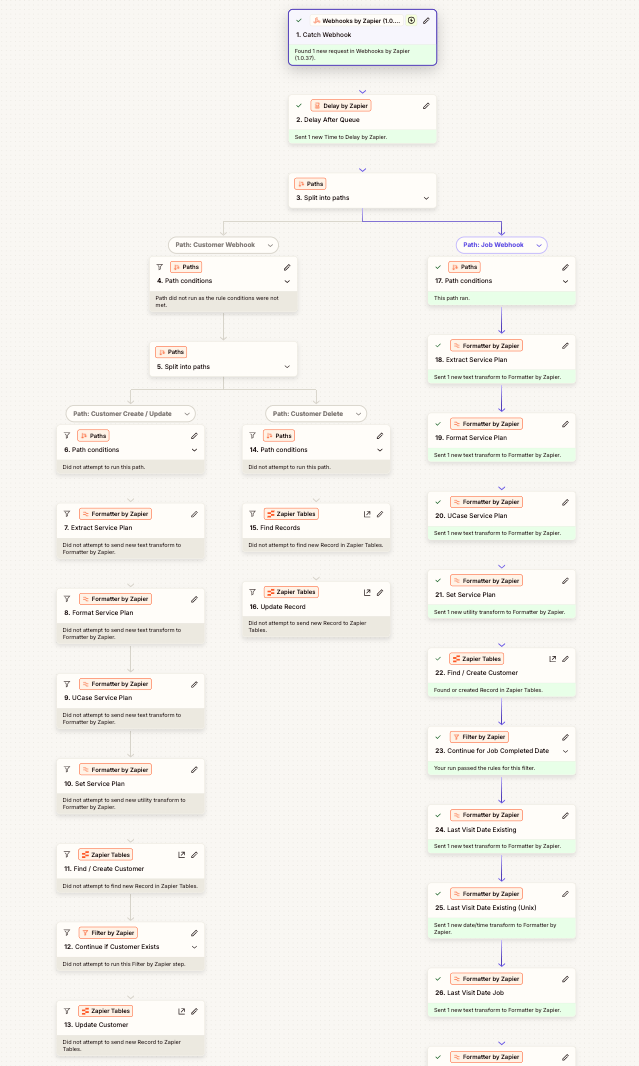
Webhooks Zap for Housecall Pro data ingestion (Part B)
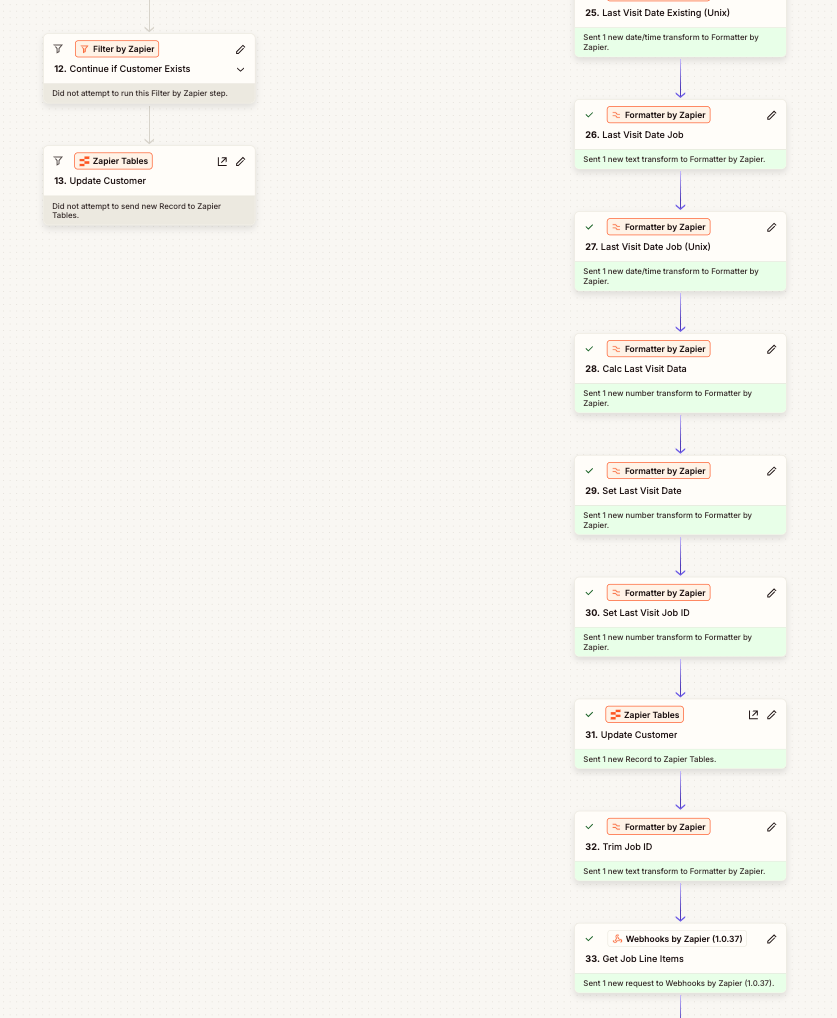
Webhooks Zap for Housecall Pro data ingestion (Part C)
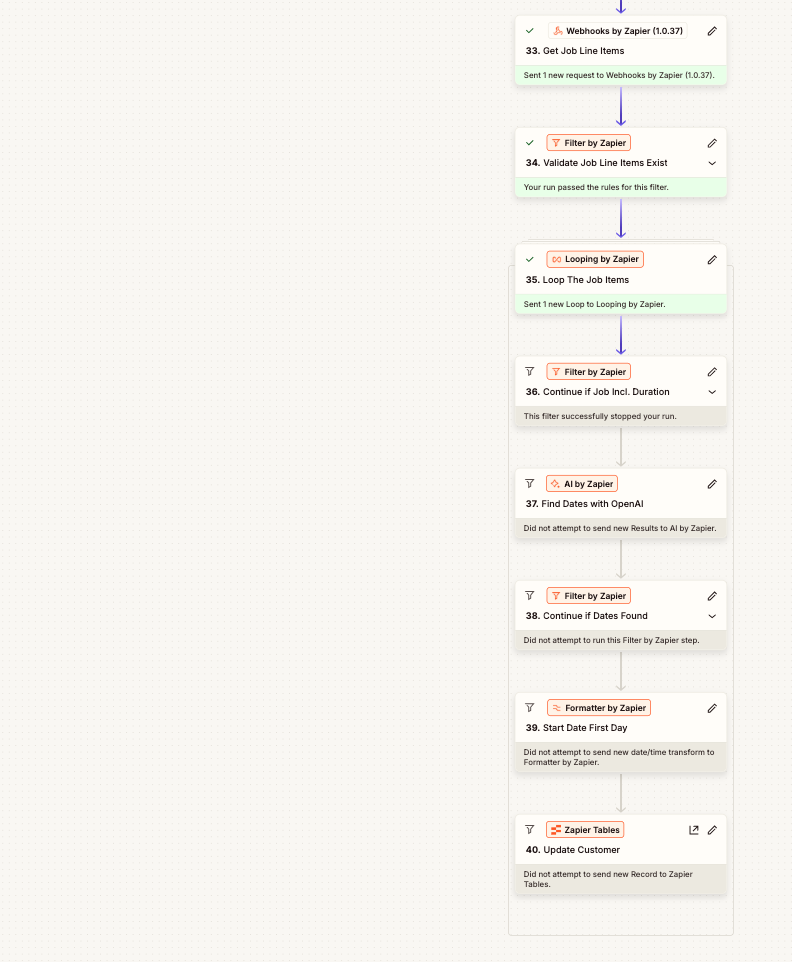
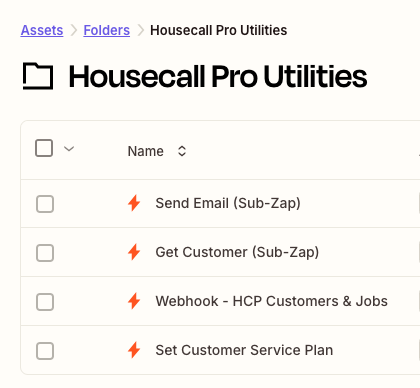
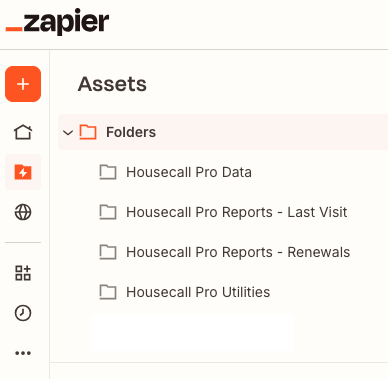
Zapier + Housecall Pro automation folder structure
Zapier + Housecall Pro utility Zaps