How a Sporting Goods Manufacturer Replaced a Limiting E-Commerce System, Integrated Its Accounting and Inventory Stack, and Immediately Grew Online Order Volume
Ortlieb USA, a sporting bags manufacturer selling through hundreds of specialty and large chain retailers, was running an e-commerce operation that couldn’t keep pace with its business. With thousands of SKUs, multiple price levels, and multiple inventory locations serving both B2B channel partners and B2C consumers, the existing system created friction at every layer — for shoppers, for retailers, and for the internal team managing orders and inventory manually.
Outcome: A modernized, mobile-optimized WooCommerce platform integrated with QuickBooks Enterprise, Google Analytics, MailChimp, and a live chat system — with a seamless cutover that produced no downtime and a nearly immediate increase in website utilization and order volume.
Client Background
Ortlieb USA is the North American distributor of Ortlieb, a German manufacturer of high-quality waterproof bags, panniers, and outdoor gear. Their sales model spans both direct-to-consumer and a network of hundreds of specialty and large chain retail partners — a dual-channel complexity that places significant demands on any e-commerce and inventory management system.
The business had outgrown its existing platform. Channel partners couldn’t easily check inventory availability online. Orders didn’t flow automatically into the accounting system, creating manual reconciliation work. The storefront wasn’t mobile-optimized, limiting the growing share of shoppers on phones and tablets. And the system offered no visibility into shopper behavior or marketing engagement.
Step 7 Consulting was engaged to assess the technology landscape, make a platform recommendation, and lead the full implementation — from discovery through production deployment.
Challenges
Ortlieb USA’s e-commerce problem wasn’t just about picking a new platform — it was about integrating that platform into an existing operational stack without disrupting a live business.
Key challenges included:
- A fragmented technology stack with no automated connection between the storefront and QuickBooks Enterprise accounting and inventory
- Manual order processing creating reconciliation overhead and error risk
- Inventory stock levels that were not visible or reliably updated on the storefront, limiting channel partner self-service
- A storefront that wasn’t mobile-optimized, creating a poor experience for the growing share of shoppers on phones and tablets
- Thousands of SKUs across multiple price levels and inventory locations requiring careful data architecture
- The need to evaluate nearly 20 different e-commerce platforms before committing to a direction
- A zero-downtime requirement — the business could not afford an e-commerce outage during the migration
Solution
Step 7 Consulting led the full engagement from technology assessment through production launch — evaluating the market, recommending WooCommerce, and implementing a tightly integrated platform that connected the storefront to Ortlieb USA’s accounting, inventory, analytics, and marketing systems.
Technology Assessment & Platform Recommendation
Before writing a line of configuration or code, Step 7 conducted a structured technology assessment — reviewing nearly 20 different e-commerce platforms against Ortlieb USA’s requirements.
The assessment evaluated platforms across criteria including:
- B2B and B2C dual-channel support
- QuickBooks Enterprise integration capability
- Multi-location inventory management
- Mobile responsiveness and UX quality
- Extensibility for custom features and future growth
- Total cost of ownership
The recommendation to use WooCommerce was presented to Ortlieb USA leadership with detailed rationale for how it addressed every stated requirement — and where it offered capabilities beyond what was originally scoped. This assessment phase prevented a costly platform decision made on assumptions and gave leadership confidence in the direction before investment in build began.
E-Commerce Platform Implementation
Step 7 led the full WooCommerce implementation, delivering a mobile-optimized storefront capable of serving both retail consumers and B2B channel partners through a single platform.
Implementation included:
- Full storefront build optimized for desktop, phone, and tablet experiences
- Product catalog architecture supporting thousands of SKUs across multiple price levels
- B2B channel partner functionality enabling retailers to check inventory stock levels directly on the storefront
- PayPal payment processing integration
- Live chat integration enabling real-time engagement between online shoppers and customer service — directly supporting conversion
- Custom feature development enabling shoppers to check in-store availability at any Ortlieb USA retail partner location
The migration was executed with no downtime to the live e-commerce business — a non-negotiable requirement given Ortlieb USA’s active sales volume.
Systems Integration
The core technical challenge of this engagement was integrating WooCommerce with Ortlieb USA’s existing back-office stack — creating automated data flows that eliminated manual work and kept the storefront in sync with operational reality.
QuickBooks Enterprise Integration
Step 7 integrated WooCommerce directly with QuickBooks Enterprise for both accounting and inventory management. Orders placed on the storefront automatically flow into QuickBooks, eliminating manual order entry and the reconciliation errors that came with it. Inventory stock levels are automatically synchronized to the storefront multiple times per day — ensuring channel partners and consumers see accurate availability without any manual intervention.
Google Analytics Integration
Step 7 integrated Google Analytics with the WooCommerce storefront, providing Ortlieb USA with real-time data visualizations and e-commerce analytics — giving the team visibility into shopper behavior, conversion performance, and channel effectiveness that didn’t exist before.
MailChimp Integration
MailChimp was integrated to connect storefront activity with email marketing — enabling Ortlieb USA to engage customers and channel partners based on purchase behavior and browsing activity.
Results
- Zero downtime during migration from the legacy platform to WooCommerce
- Immediate increase in website utilization and order volume following launch
- Eliminated manual order entry — orders flow automatically into QuickBooks Enterprise
- Inventory levels automatically synchronized to the storefront multiple times daily
- Channel partners gained visibility into inventory availability directly on the storefront
- Mobile-optimized storefront serving both B2B and B2C customers across any device
- Real-time analytics visibility via Google Analytics integration
- Live chat capability added to support conversion and customer service engagement
- In-store availability feature extended the value to Ortlieb USA’s retail partner network
Before & After Snapshot
Before
- Legacy storefront not optimized for mobile or B2B self-service
- Manual order entry from web to QuickBooks — error-prone and time-consuming
- No real-time inventory visibility on the storefront
- No analytics visibility into shopper behavior
- No integration between storefront and email marketing platform
After
- Mobile-optimized WooCommerce platform serving both B2B and B2C
- Automated order flow from storefront to QuickBooks Enterprise
- Inventory levels updated automatically multiple times per day
- Real-time e-commerce analytics via Google Analytics
- MailChimp connected to storefront activity for targeted marketing
- Zero-downtime launch with immediate lift in utilization and order volume
Why This Matters for Growing Organizations
Many growing companies running WooCommerce or similar platforms are doing so in isolation — the storefront works, but it doesn’t talk to accounting, inventory, or marketing. The result is manual work, reconciliation risk, and a business that can’t scale without adding headcount.
This project demonstrates how Step 7 Consulting helps operational teams:
- Make platform decisions through structured assessment rather than assumption
- Connect critical systems — storefront, accounting, inventory, marketing
- Eliminate manual workflows that create overhead and error risk
- Deliver complex multi-system integrations without disrupting live operations
- Build platforms that serve both B2B and B2C channels from a single architecture
The result isn’t just a better website — it’s an integrated operational platform that scales with the business.
Project Artifacts
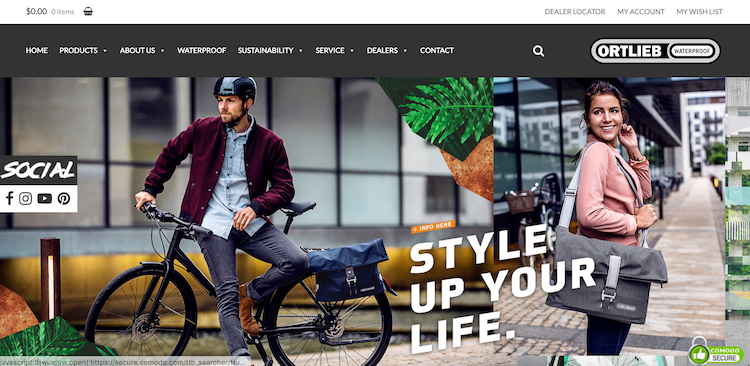
Ortlieb USA Home Page